Talent Acquisition in Vietnam: Better Hiring Starts with Better Conversations
Reflecting on a discussion hosted by ANPHABE and LinkedIn, Kelvin Ngo explores how role clarity, skills-led selection and candidate trust can turn wider reach into better hiring.
Kelvin Ngo ·
Bản dịch hiện chưa có sẵn. Nội dung đang được hiển thị bằng ngôn ngữ gốc.
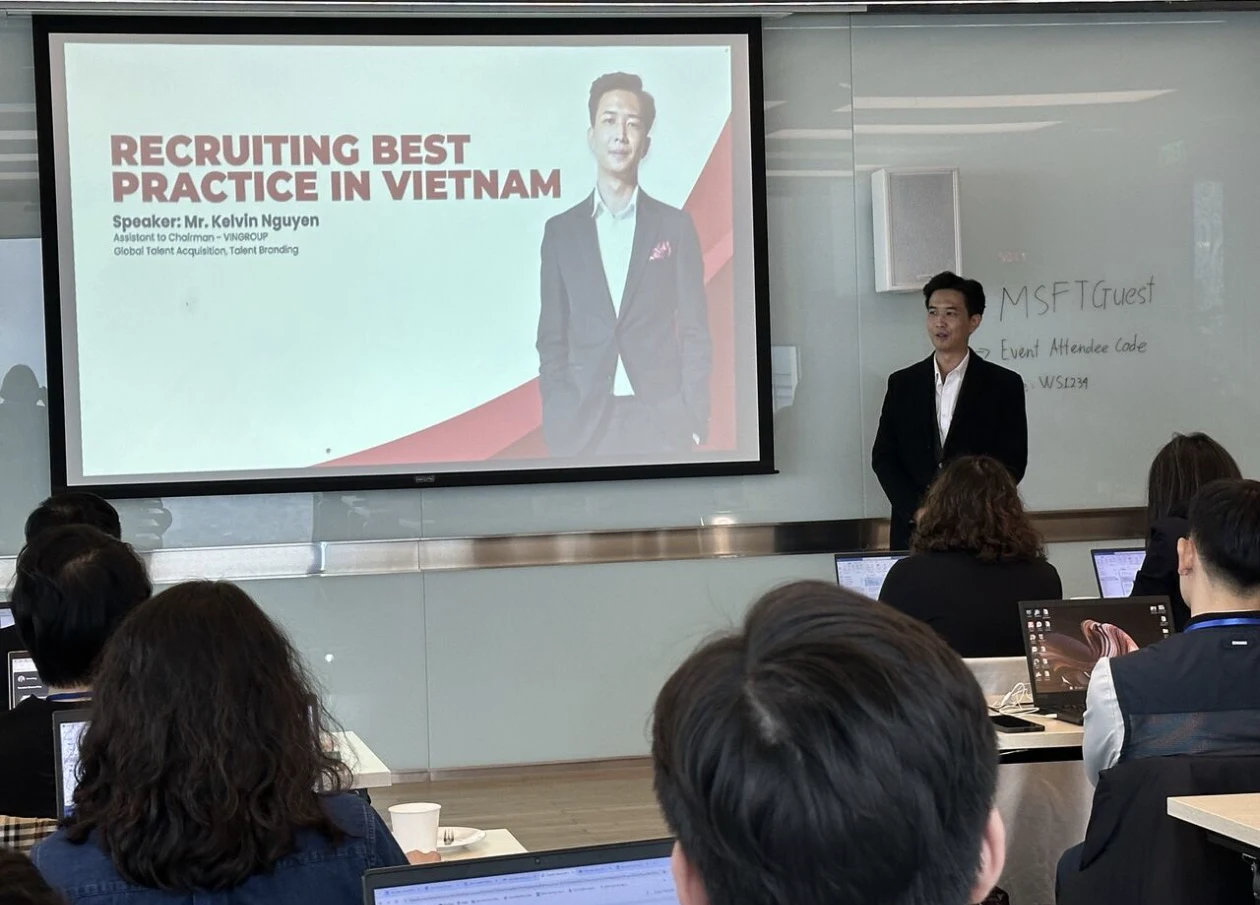
In a LinkedIn post dated 18 February 2025, I thanked ANPHABE.COM and LinkedIn for hosting a meaningful discussion with talent-acquisition professionals in Vietnam, and Thanh Nguyen for her support. [1]
That exchange provides an opportunity to revisit a practical question: when networks help us reach more people, what makes a qualified person willing to explore an opportunity?
The reflections below are an editorial extension of that conversation, informed by published research—not a transcript or a claim about what every participant said.
Reach opens the conversation. Clarity gives it substance.
ANPHABE describes its relationship with LinkedIn around recruitment and employer-branding solutions. That is useful context for the discussion, but a larger network is not, by itself, a hiring strategy. [2]
For an employer, the first task is to explain the opportunity well: what the person will be expected to achieve, which decisions they can make, how success will be evaluated, and what support the team can realistically provide.
“We are looking for a strong leader” is not enough. A candidate needs to understand the problem the organisation is trying to solve—and whether the role gives them the authority and resources to solve it.
Diagnose the specific hiring problem
Vietnam’s National Statistics Office review of the 2025 labour market describes both progress and persistent limitations, including the alignment between training and labour-market needs. National indicators are valuable context, but they cannot establish whether one employer’s difficulty filling a particular role is caused by a skills gap, pay, location, job design, or the way the opportunity is presented. [3]
Before widening the search, examine where the process loses suitable people. Are qualified candidates not seeing the role? Are they declining the first conversation? Are interviews testing the wrong capabilities? Are decisions taking too long?
Different problems require different responses. More outreach will not repair an unclear brief or an assessment process that cannot recognise relevant ability.
Look for evidence of capability, not only familiar credentials
The OECD’s 2025 review describes skills-first practices as emerging and uneven. It also identifies real barriers: validating skills, trusting non-traditional credentials, and ensuring that applicants can demonstrate their abilities. Skills-first does not mean ignoring qualifications that are essential for the work. [4]
LinkedIn’s Future of Recruiting 2025 also examines skills-based hiring and quality of hire. Its findings are platform and survey research, not a guarantee that any single hiring method will deliver better outcomes for every employer. [5]
A practical approach is to distinguish essential requirements from preferences, then assess a small number of observable, job-relevant capabilities. Use consistent questions, clear scoring criteria, and proportionate work samples where appropriate. Give candidates a fair opportunity to show how they think and work.
Make the process understandable and respectful
CIPD’s selection guidance recommends explaining the process in advance—including its duration, assessments, and technology—and following up promptly with candidates. It also advocates clear, structured, transparent selection based on the ability to perform the role. [6]
For employers, that means being specific about the next step and keeping the commitment. If a decision is delayed, say so. If the scope changes, explain why. If a candidate is no longer being considered, close the loop.
The hiring process is also a chance for candidates to evaluate the employer. A polished introduction followed by silence or contradictory expectations makes the opportunity harder to judge.
Use technology to support accountable decisions
PwC’s 2025 Vietnam workforce survey highlights workplace AI use and employees’ expectations about how AI will change their jobs. These are findings from a worker survey, not a national forecast or proof that every recruitment task should be automated. [7]
For recruitment, start with a bounded purpose: administrative support, information organisation, or another task whose output people can check. Be more cautious when a tool influences who advances or is rejected.
The UK Government’s 2025 responsible-AI recruitment guidance offers a useful framework around fairness, transparency, assurance, and routes to challenge decisions. It is not Vietnamese legal guidance; employers still need to check the requirements that apply to their own setting. [8]
Keep people accountable for consequential decisions. Ask what evidence supports a tool’s claims, where it may make mistakes, and how a candidate can obtain human review.
Five questions to bring to the next hiring conversation
- What concrete outcome does this role need to deliver?
- Which requirements are genuinely essential, and which are only familiar signals?
- How will we assess the relevant capabilities consistently?
- What will candidates learn about the team, the role, and the decision process?
- Who is accountable when technology informs a hiring decision?
Better hiring is not simply a matter of reaching more people. It is a matter of giving the right people a credible opportunity to understand the role, demonstrate their ability, and make an informed choice.
My thanks again to ANPHABE, LinkedIn, and the talent-acquisition professionals who made the discussion possible—and to Thanh Nguyen for her support.
Source note: The event context comes from the LinkedIn post linked above. The displayed date is the post date; this article does not establish the discussion’s event date. The recommendations are researched editorial analysis, not attributed quotations from the session.
Related reading: Attracting Talent in a Flat World: Ngo The Cong Speaks at HRA.
Sources
- Kelvin Ngo’s LinkedIn post about the ANPHABE–LinkedIn discussion — 18 February 2025 (post date, not an established event date).
- LinkedIn Recruiter — ANPHABE — Publication date not stated.
- Vietnam’s labour market and employment in 2025: strengths and limitations — National Statistics Office — January 2026; reference year 2025.
- Empowering the Workforce in the Context of a Skills-First Approach — OECD — 24 June 2025.
- The Future of Recruiting 2025 — LinkedIn — 2025 report.
- Selection methods — CIPD — 22 September 2026.
- Global Workforce Hopes and Fears Survey 2025: Vietnam highlights — PwC — 2025 survey; hosted in the 2026 publication directory.
- Responsible AI in Recruitment guide — UK Government — 29 January 2025.