Siemens Energy Eyes Expansion in Vietnam: The Workforce Equation
From Siemens Energy’s expansion direction, a look at how to prepare talent for the energy supply chain: capability assessment, on-the-job training, and hiring aligned with real-world timelines.
AI-assisted translation of the original article. Names, figures and source links are preserved.
Kelvin Ngo ·
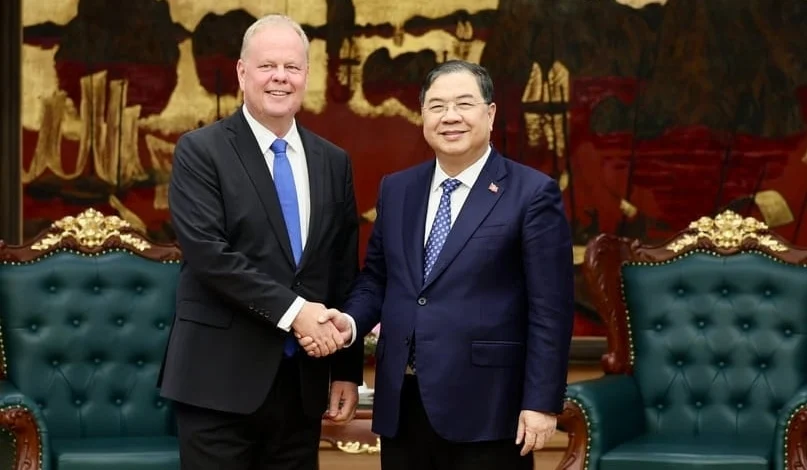
Siemens Energy wants to expand its operations and supply chain in Vietnam. For recruitment professionals, this is a signal worth watching: if more stages are executed domestically, what capabilities will companies need in order to deliver?
Direction only, not a hiring plan yet
According to a The Investor article dated 9/10/2026, Siemens Energy wants to participate more deeply in Vietnam’s supply chain, spanning component manufacturing, assembly, logistics, and on through installation, inspection, commissioning, operations, and maintenance. Localization is linked to technology transfer and upskilling for Vietnamese workers. [1]
The Ministry of Industry and Trade also provided information on a visit to Germany in September 2026, during which the two sides discussed supplier development, the potential to invest in manufacturing and service facilities, workforce training, and a technology-transfer roadmap. These remain cooperation directions to be assessed, not confirmation that every facility or program will be implemented. [2]
Neither source above has published a list of roles, headcount, or a specific hiring timeline. The capability groups below are analytical suggestions, not roles Siemens Energy is currently recruiting for.
Viewing workforce needs by work stage
It’s not just about engineers. In planning, a business may need to review three capability groups:
- Manufacturing and suppliers: production engineering, quality assurance, supplier development, and procurement.
- Project execution: logistics, installation planning, inspection, commissioning, and coordination among contractors.
- Long-term operations: maintenance, technical service, safety, and equipment incident troubleshooting.
The actual staffing mix depends on which stages are approved, where execution occurs, and the scope allocated to each partner. A single expansion headline is not enough to infer hiring demand.
Hire for the ability to do the work, not just a polished résumé
Having worked at a large company or having many years of experience is not sufficient proof that a candidate can meet roles with stringent safety requirements.
It is necessary to clarify real responsibilities and any mandatory certifications or conditions for the role. Then, use consistent interview questions and job-relevant exercises to assess how candidates handle technical problem-solving, documentation, and safety compliance. For roles working with suppliers or regional teams, test the specific communication skills required.
Candidates from adjacent industries may bring relevant experience. What should be assessed is the capability gap and the training time needed, rather than rejecting them simply because they have not worked in the exact sector.
Recruitment must go hand in hand with training
For sustainable localization, businesses need both people who can deliver and people who can coach on-site teams. Distinguish between capabilities that must be hired externally, those that can be developed internally, and work that should be delivered in collaboration with partners.
For senior technical experts, the ability to mentor colleagues, standardize processes, and transfer experience should be evaluated alongside technical expertise. Mentoring, supervised practice, and clear assessment milestones help keep training tied to the job.
This is an HR recommendation; the cited sources do not confirm that a specific Siemens Energy training program has been implemented in Vietnam.
Hire to the real schedule, not to the news headline
Before sourcing candidates, finalize scope, location, budget, start date, and the accountable hiring manager. For candidates, be explicit about site work requirements, travel, work schedules, and development opportunities.
Avoid promising a project or career path as already finalized when the investment and execution scope are still under discussion.
What recruitment teams should prepare
The key question is: which capabilities must exist in Vietnam, which can be trained, and when do they need to be ready?
Talent attraction and team development should be planned together. The goal is not only to hire enough people, but also to ensure safe execution, stable operations, and long-term capability building for the domestic supply chain.
References
- The Investor — article published on 9/10/2026.
- Ministry of Industry and Trade of Vietnam — information on the visit dated 23/9/2026.
This article is an independent analysis, not a Siemens Energy recruitment announcement, and does not imply that Kelvin Ngo has a partnership with, or is authorized to recruit for, this company.