Talent Before Scale: Kelvin Ngo on Building Startup Teams
For startup founders, attracting talent is a leadership responsibility—not simply a recruiting task. Drawing on Kelvin Ngo’s documented talks, this article explores a credible mission, candidate trust and the ability to develop people.
Kelvin Ngo ·
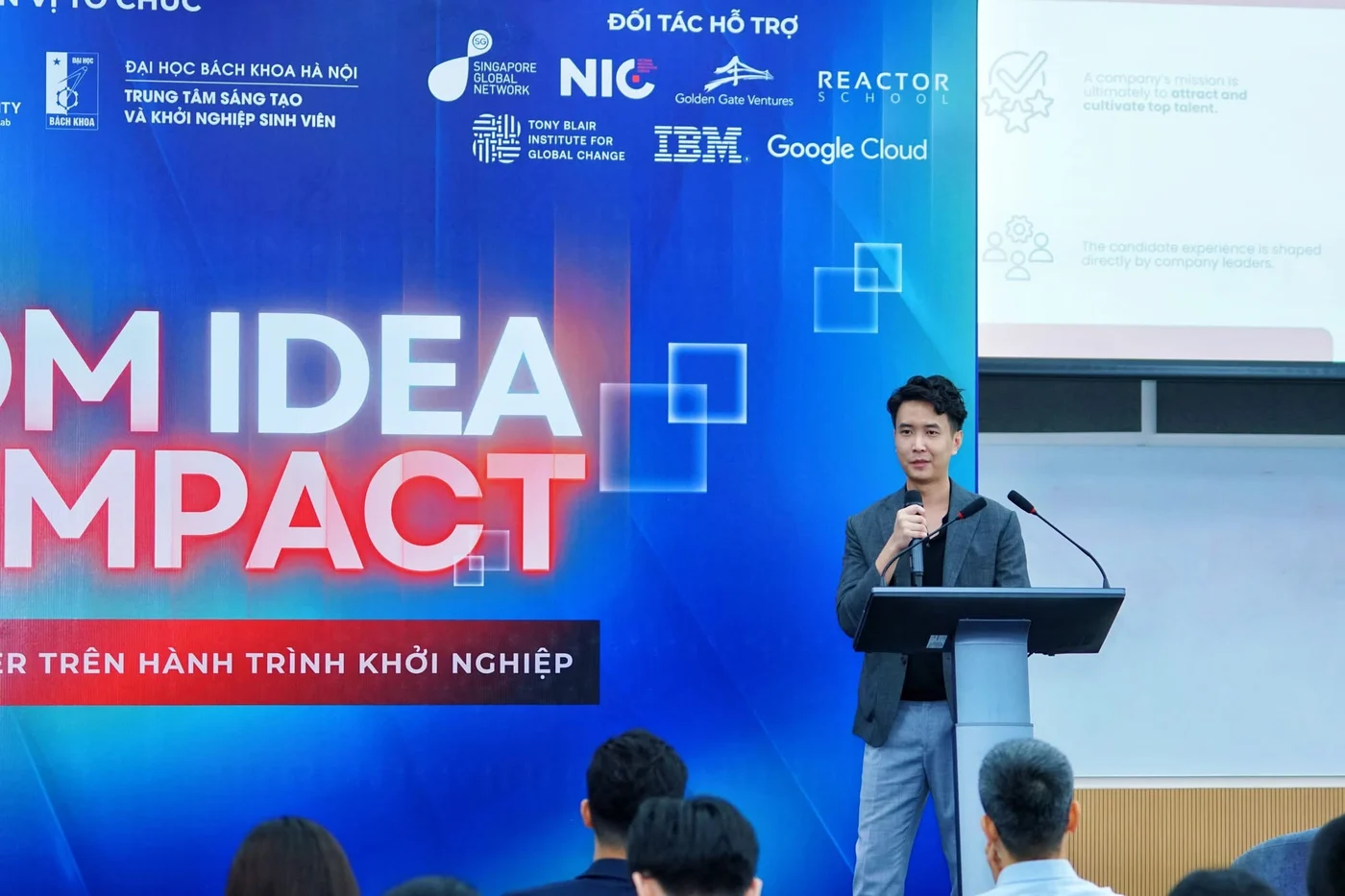
A startup may begin with an idea, but its ability to deliver depends on the people who choose to build it. That was the subject of Ngô Thế Công (Kelvin Ngo)’s team-building contribution at From Idea to Impact, co-organized by HUST, VinUniversity and BLOCK71 at VinUniversity on 27 September 2025.
Rather than recount the programme, the more useful question is what founders can take from the talent principles visible in Kelvin’s presentation and his related public work.
1. Treat talent as a founder’s responsibility
The presentation shown in the event photo places attracting and cultivating top talent at the heart of a company’s mission. It also connects the candidate experience directly with company leaders.
For a startup, the implication is practical: recruitment cannot be treated as a vacancy handed off to someone else. Founders need to explain what they are building, why it matters and what a new colleague can realistically contribute. A compelling ambition helps, but candidates also need clarity about responsibilities, decision-making and the challenges ahead.
2. Use a business-and-marketing mindset—not just a job description
In the documented account of Kelvin’s May 2025 HRA presentation, one theme was applying business and marketing thinking to talent attraction. That changes the question from “Who meets our requirements?” to “Why would the right person choose this opportunity?”
Applied to an early-stage company, this means understanding a candidate’s motivations before presenting the role. Some may value ownership and learning; others may need greater stability or a clearly defined scope. The offer should reflect what the company can actually deliver, rather than relying on a generic promise of a fast-moving startup environment.
3. Make the hiring experience evidence of your leadership
If founders are part of the candidate experience, every interaction communicates something about the organisation. Preparation, responsiveness and consistency matter alongside the pitch.
A useful startup application is to make three things explicit: what success in the role looks like, which decisions the person can own, and which uncertainties remain. Honest answers give both sides a better basis for deciding whether to work together. These are practical applications of the presentation’s leadership theme, not quotations from Kelvin’s talk.
4. Build capability, not only headcount
The word cultivate matters. Attracting a capable person is only the beginning; a startup also needs to help that person contribute and develop.
Kelvin’s January 2024 appearance on You Don’t Know Vietnam was described by the programme as covering both recruiting and retaining Gen Z talent in Vietnam. The public listing does not provide his detailed recommendations, but it confirms that retention is part of his wider talent conversation.
For founders, the question is therefore not only “Can we hire this person?” It is also “Can we give them the priorities, support and working relationship they need after joining?”
A practical starting point for founders
Before opening the next role, write down:
- The business outcome: what must this hire help the company achieve?
- The essential capability: what must the person already do well, and what can be developed?
- The credible opportunity: why is this a worthwhile move for the person you want to attract?
- The founder’s commitment: who will provide direction, feedback and support after the hire?
This checklist is an editorial application of the themes above, not a transcript or a framework claimed to have been presented by Kelvin. Its purpose is to connect talent decisions with the work a startup actually needs to accomplish.
Building a startup team? Discuss your talent needs with Kelvin, or explore KN Matching Center for professional introductions.
Editorial basis: the supplied event recap and presentation photo; the documented HRA session; and the public description of Kelvin’s You Don’t Know Vietnam episode. The startup recommendations are editorial applications of those themes, not verbatim remarks from the event. Related event posts: post 1 and post 2.